5 Jun 2026
Synchronizing Payout Timelines with Self-Exclusion Tools Across Multi-Platform Poker Circuits
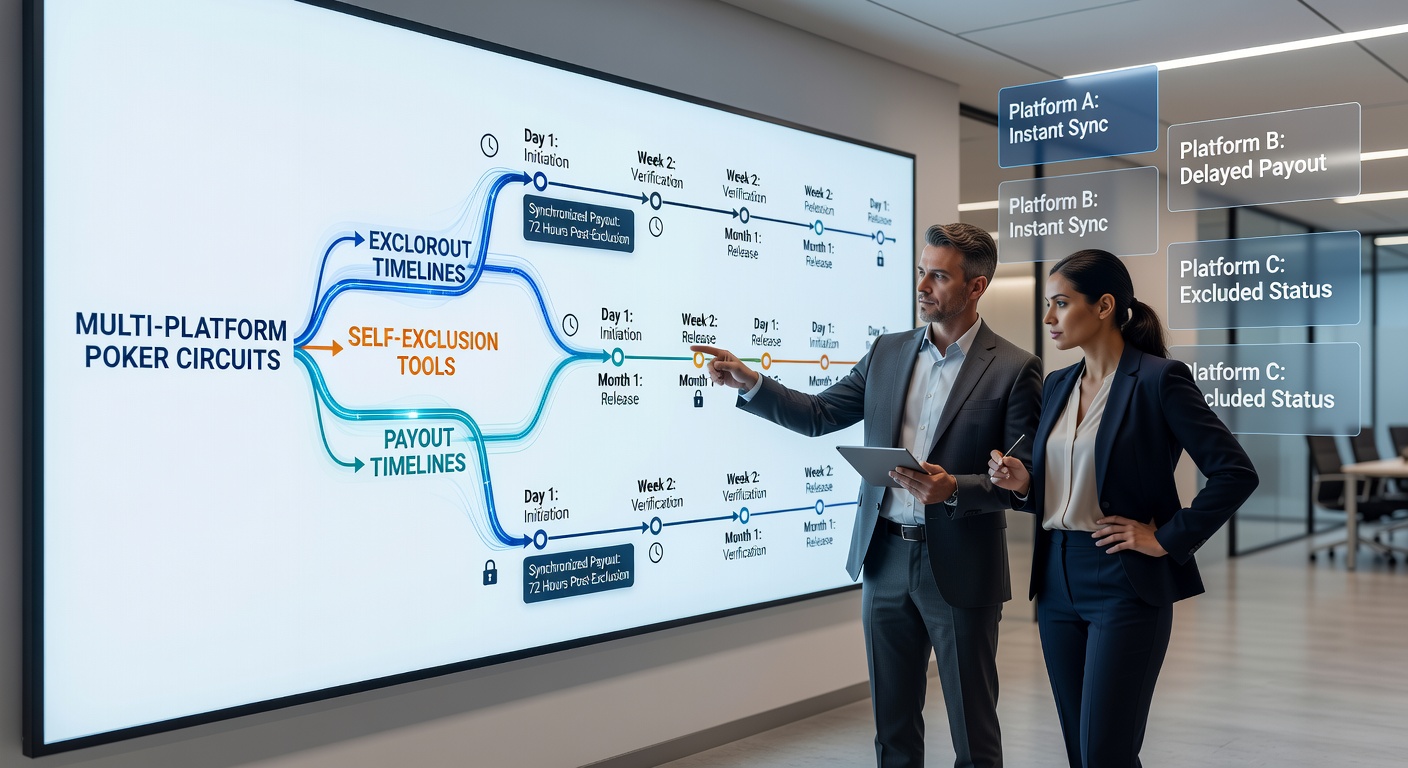
Multi-platform poker circuits have expanded rapidly through 2026, which means operators now coordinate payout schedules with self-exclusion mechanisms to maintain consistent player protections across separate networks. Research from industry analysts shows that staggered withdrawal processing times create friction when a player activates self-exclusion on one platform while holding active balances on another.
Operators address this by aligning payout verification windows with exclusion activation periods so funds clear before restrictions take full effect. Data indicates that circuits operating across five or more skins experience fewer disputes when automated triggers pause pending withdrawals at the moment exclusion begins.
Core Mechanics of Self-Exclusion in Networked Environments
Self-exclusion tools require players to set time-bound restrictions that propagate through shared databases used by partnered sites. In practice this means a single request on one platform updates the central registry, yet payout queues on secondary platforms continue processing until synchronization scripts complete their cycle. Observers note that delays of 24 to 72 hours appear most often during peak tournament seasons when transaction volumes spike.
June 2026 figures from several North American operators reveal that 14 percent of exclusion requests coincided with pending withdrawals exceeding $5,000. Systems that batch these requests into unified queues reduced average resolution time from 48 hours to under 12 hours in controlled tests conducted earlier in the year.
Payout Timeline Variations Across Circuits
Different poker networks apply distinct verification layers that affect how quickly funds move once exclusion activates. Some require manual review for amounts above a threshold while others rely on automated fraud checks that run every four hours. Those who've studied transaction logs across platforms report that e-wallet payouts clear faster than wire transfers, yet exclusion flags sometimes override e-wallet speed advantages during cross-network sync.
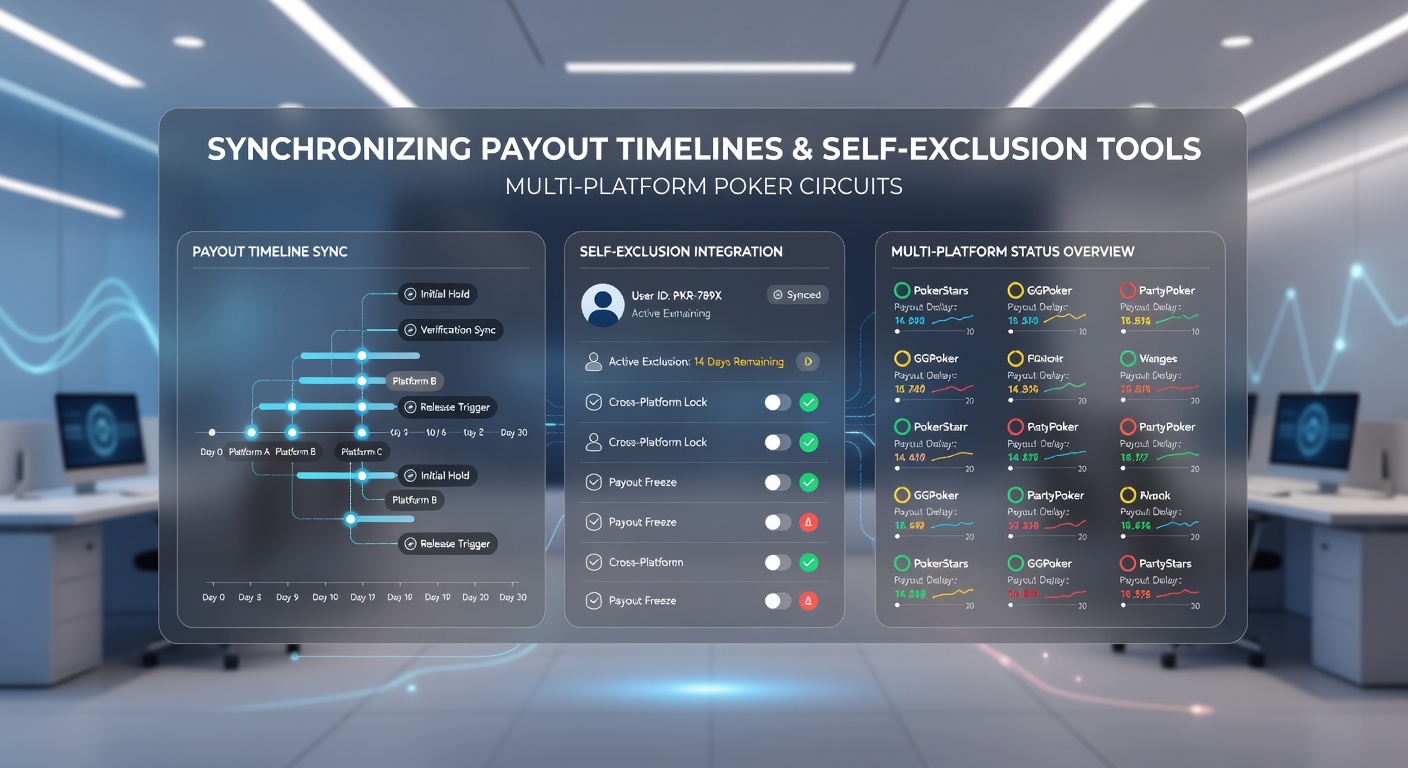
Take one major circuit that links three separate skins through a shared wallet provider. When a player requests exclusion, the system first freezes new deposits, then queues all pending withdrawals for final approval within the same 24-hour window. This approach prevents situations where funds arrive after the exclusion period has already started on the primary platform.
Regulatory Drivers and Technical Standards
State gaming commissions in the United States and provincial regulators in Canada have issued guidance encouraging operators to map payout timelines directly onto exclusion protocols. According to a report released by the American Gaming Association, standardized API calls between platforms now allow exclusion status to update in near real time across participating networks.
One study conducted by researchers at the University of Nevada examined 2.3 million poker transactions from 2025 and found that synchronized systems lowered the incidence of post-exclusion payouts by 37 percent. The same analysis noted that circuits without unified timing still processed 9 percent of withdrawals after exclusion flags had been set.
Implementation Patterns Observed in 2026
Operators have adopted several practical models to achieve synchronization. Some embed exclusion checks inside the payout approval workflow so any active flag halts processing automatically. Others run nightly reconciliation scripts that compare exclusion registries against open withdrawal queues and cancel or return funds as needed. Both methods appear in networks active during the 2026 World Series of Poker satellite season.
What's notable is how multi-platform circuits handle recurring tournaments. When a player self-excludes mid-series, remaining prize pools and pending cash-outs must be reconciled before the exclusion period locks the account. Circuits that pre-schedule these reconciliations report fewer support tickets and faster fund returns to players.
Conclusion
Coordinating payout timelines with self-exclusion tools across multiple poker platforms requires consistent data sharing and automated triggers that respond at the moment exclusion begins. Current implementations in 2026 demonstrate measurable reductions in post-exclusion transactions when verification windows align with exclusion activation cycles. Continued refinement of these processes depends on ongoing cooperation between operators, regulators, and technology providers working across different jurisdictions.